Ep. 31 | 4 Steps to Sharing Stories That Engage Donors
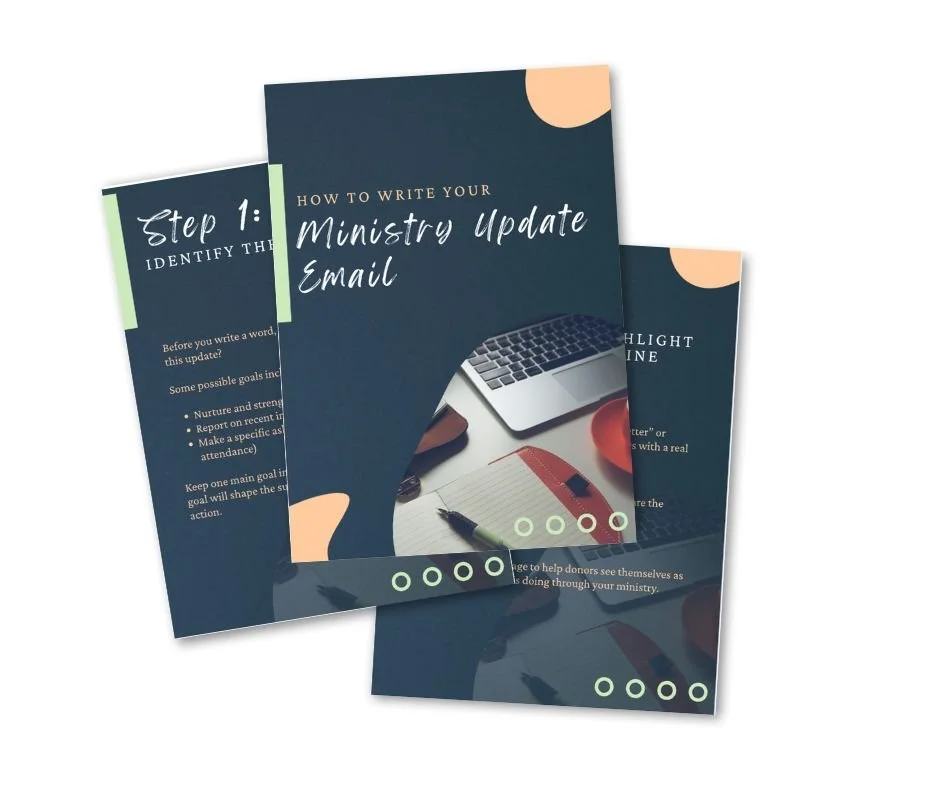
Struggling to Write Your Newsletters so Supporters Engage?
You’ve seen God do amazing things- but if your emails are vague or unclear, your supporters won’t feel connected.
This free guide will show you how to:
Write subject lines that get your emails opened
Follow a simple story-driven format for every update
Engage donors with clear, Christ-centered storytelling
As a ministry leader, you’ve seen the power of stories.
You’ve watched God move in people’s lives. You’ve seen transformation, freedom, healing, provision, and restoration. Those stories lift you when you’re tired. They remind you why you do what you do.
But when it comes time to share those stories with donors and supporters… you might feel stuck.
Maybe you’ve thought:
“I know stories are powerful, but I don’t know how to tell them.”
“I’m not a storyteller or a creative person.”
“All my stories feel the same.”
“I don’t even know where to start.”
So instead of sharing stories, you end up sharing information—facts, stats, updates, and bullet points—and wonder why people don’t lean in.
The truth is:
You can have all the best information in the world, and it still won’t impact people the way a single, well-told story can.
The good news? You can tell meaningful, powerful stories—without being “naturally creative” or having a film team.
In this blog, I’ll walk you through four simple steps to share a story that engages donors and invites them to take action.
These steps work for:
Impact stories (someone whose life was changed through your ministry)
Donor stories (how a donor’s own life was impacted by giving)
Origin stories (how God called you or your founder to start the ministry)
Let’s break it down.
Step 1: Pick One Character
The first step is simple but crucial:
👉 Pick one person and tell their story from beginning to end.
Not three people.
Not a crowd.
Not “the kids,” “the women,” or “the families.”
One person.
This keeps your story:
Simple – easier to follow, especially if you’re sharing on stage or in a short video.
Personal – donors connect emotionally to a face and a name, not a vague group.
Memorable – people remember individuals more than abstract categories.
As you choose your character, consider:
Are they likable? (Can listeners empathize with them?)
Are they unique? (Something about them that stands out—humor, courage, tenderness, personality?)
Do they have a clear, compelling journey related to your ministry’s work?
You don’t need someone “perfect” or polished. You need someone real whose story allows donors to feel something.
This person becomes the lens through which donors see your ministry.
Step 2: Clarify the Main Conflict
Every meaningful story has a problem.
For your character, ask:
👉 What is the main conflict or problem they were facing?
Don’t list every struggle or detail of their life. Pick one main conflict you want the story to focus on.
For example:
A woman has lost her home and is now homeless.
A teenager is trapped in addiction.
A family is living in deep spiritual isolation.
A donor feels disconnected and unsure if their giving really matters.
Start with the outer problem (what happened), but then go a layer deeper into the emotional impact:
What did that situation feel like for them?
Did they feel alone? Helpless? Ashamed? Afraid? Invisible?
What did they believe about themselves or God in that moment?
Often, the emotional impact becomes the true conflict of the story.
For example:
Outer conflict: She lost her home and is homeless.
Inner conflict: She feels utterly alone, hopeless, and forgotten.
That deeper, emotional conflict is what donors will connect with—and what makes the resolution powerful.
Tip: The conflict and resolution go together like opposites. If the conflict is “alone and helpless,” the resolution might be “known, supported, and hopeful.”
Step 3: Show the Resolution (What God Did & How Your Ministry Helped)
Next, you move to the turning point:
👉 How was the conflict resolved? What did God do, and how did your ministry play a role?
This is the climax of the story—the part that makes hearts swell and eyes well up.
Here’s what to highlight:
What shifted? (Externally and internally.)
How did your ministry step in? (Programs, relationships, discipleship, practical help.)
Where do you see God’s hand? (Provision, healing, restoration, breakthrough.)
You don’t need to give every detail of the process, but you do need to clearly show:
“This is where they were…”
“This is what they walked through…”
“This is where they are now…”
And as much as possible, emphasize the emotional resolution:
Alone → Known and surrounded
Helpless → Equipped and hopeful
Ashamed → Loved and accepted
Lost → Rooted in Christ and community
This is where you celebrate the miracle, the transformation, the redemption. Don’t rush this part. This is the moment that reveals why your ministry exists.
Step 4: Bring It Back to the Donor
This last step is where most ministries fall short.
They tell a beautiful story… and then end with:
“Isn’t God good? Okay, thanks for listening.”
But your donors have a crucial role in that story.
👉 You need to connect the dots and show them how they were (or can be) part of that transformation.
That might sound like:
“Because of your support, Maria didn’t walk through this alone.”
“Your generosity helped Jamal find safety, community, and hope in Christ.”
“Stories like this are only possible because people like you said yes to giving.”
And if you’re sharing the story with people who aren’t giving yet:
“If you’ve ever wondered whether your giving really matters, I want you to think of Ana. Your support can be the difference between a girl feeling invisible and feeling seen, loved, and safe.”
You’re not just raising money for “our ministry.”
You’re inviting donors into a story where they make a real impact on a real person.
You’re the bridge—connecting the donor to the person in need.
And then, end with a clear call to action:
“If you want to be part of stories like this, you can become a monthly partner at…”
“To help more women like her, visit…”
“To start giving today, go to…”
Putting It All Together
Here’s a quick recap of the 4-step story framework:
Pick a character
One real person. One journey. Make it personal and focused.
Clarify the main conflict
What problem were they facing—on the surface and in their heart?
Show the resolution
What did God do? How did your ministry participate in that transformation?
Bring it back to the donor
Show the donor their role in the story and invite them to respond.
You don’t have to be “a storyteller” to use this framework.
You just need to start with one person, one conflict, and one clear resolution—and then invite donors into what God is doing.
God has already been writing powerful stories through your ministry. Your job is to share them clearly so others can see His work and join in.
Don’t Tell Stories (or Fundraise) Alone
If you’re feeling overwhelmed, discouraged, or lonely in the support-raising journey, you are not the only one.
That’s exactly why I created a free community for women ministry leaders who love Jesus and are raising support for their ministries and nonprofits.
It’s a place to:
Be encouraged
Share ideas and stories
Pray for each other
Learn practical tools for fundraising and communication
You don’t have to figure this out solo.
👉 Join us here: irisstorytelling.com/community
Let’s tell better stories—and invite more people into what God is doing—together.
More Episodes