Ep. 54 | Struggling With Ministry Fundraising? A Simple Story Framework That Finally Works
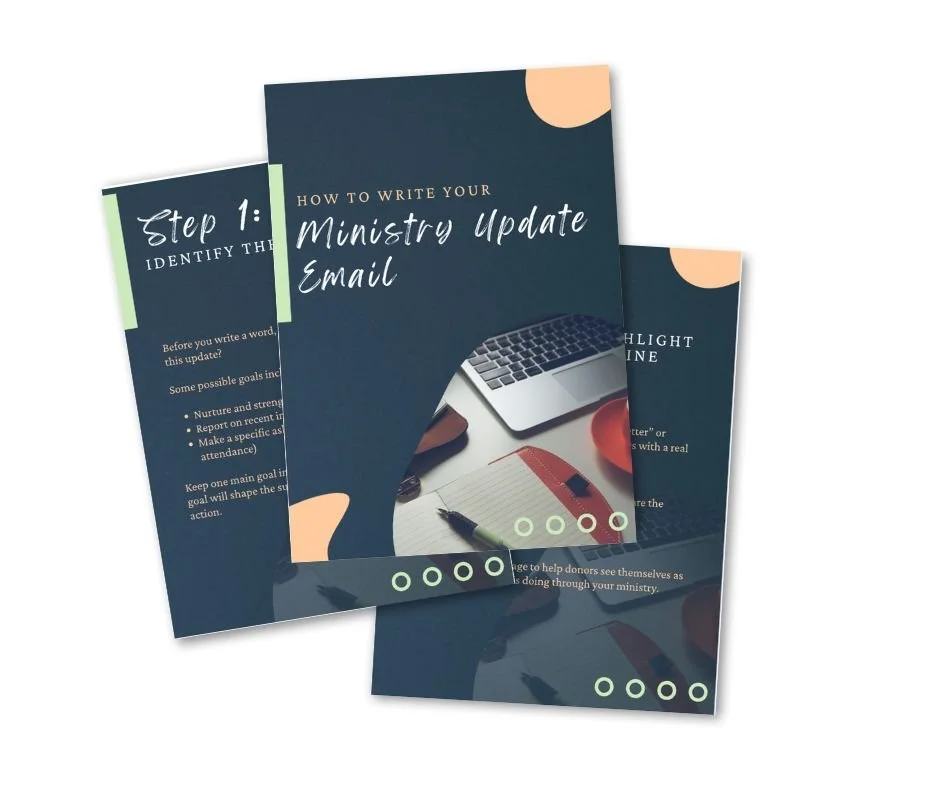
Struggling to Write Your Newsletters so Supporters Engage?
You’ve seen God do amazing things- but if your emails are vague or unclear, your supporters won’t feel connected.
This free guide will show you how to:
Write subject lines that get your emails opened
Follow a simple story-driven format for every update
Engage donors with clear, Christ-centered storytelling
If you’ve ever sat down to write a fundraising email and felt like you had nothing to say, you’re not alone. Most ministry leaders are gifted in ministry work—but not necessarily in communicating their mission in a way that connects and motivates donors.
That blank screen isn’t a sign of failure. It’s a sign you’ve been trying to communicate without a clear structure.
In this post, I’m going to give you a practical story framework you can apply to your next newsletter, email, social post, or fundraising ask — without guessing if it will “work.”
The Problem: Messaging That Doesn’t Connect
Fundraising emails often fail because they focus on the ministry first:
“What we did last month…”
“Here’s the thing we’re trying to do…”
But donors don’t engage with your ministry story. They engage with a version of their own story — the part where they can see themselves doing good, meaningful work.
So the first step toward better fundraising is not writing more — it’s writing differently.
Step 1: Redefine Your Characters
Every good story has a main character and a supporting character.
In nonprofit messaging that actually works:
Main Character = Your Donor
Supporting Character = Your Ministry
That shift alone changes the message from “here’s what we’re doing” to “here’s how you can be part of changing this.”
When donors see themselves as the hero — even silently — they’re more likely to respond, engage, and give.
Step 2: Define the Conflict Clearly
In every compelling narrative, a real problem drives the action.
That problem isn’t internal to your ministry.
It’s something tangible that matters to your donor — like kids without safe homes, families without food, or students without mentors.
Your role as the supporting character is to help explain:
What’s at stake?
Why it matters right now
How the donor can help change the outcome
Step 3: Show the Path to Resolution
Once the conflict is clear, donors need a next step — not just an emotional pitch.
This is where you explain:
“This is what we’re doing to address the problem.”
“Here’s how you can help.”
“Here’s what will happen if you choose to act.”
Fundraising is not just asking for money — it’s showing a clear path where donor support makes a measurable difference.
What This Looks Like in Practice
Let’s say your ministry provides safe homes for youth. Rather than:
“We need $5000 for repairs…”
Try structuring the message this way:
Conflict: Many kids don’t have a secure place to grow and thrive.
Guide Role: Our ministry has a plan to provide safe homes and support.
Action: X dollars helps keep a youth’s room warm, safe, and rooted in community.
Resolution Vision: When donors act, these youths grow in confidence, stability, and hope — something your donor deeply cares about and can help make real.
Why This Works
Donors don’t give because your ministry exists — they give because they can see themselves part of a story of impact.
When your message:
puts donors first
defines the conflict clearly
offers a clear way to make a difference
…your fundraising communication stops being heavy and starts being meaningful.
And once you master this structure, you can use it everywhere — newsletters, emails, social posts, presentations, and more.
Ready to fix your ministry message so it starts working?
More Episodes