Ep. 43 | Why Your Fundraising Messaging Isn’t Working—and How Storytelling Fixes It
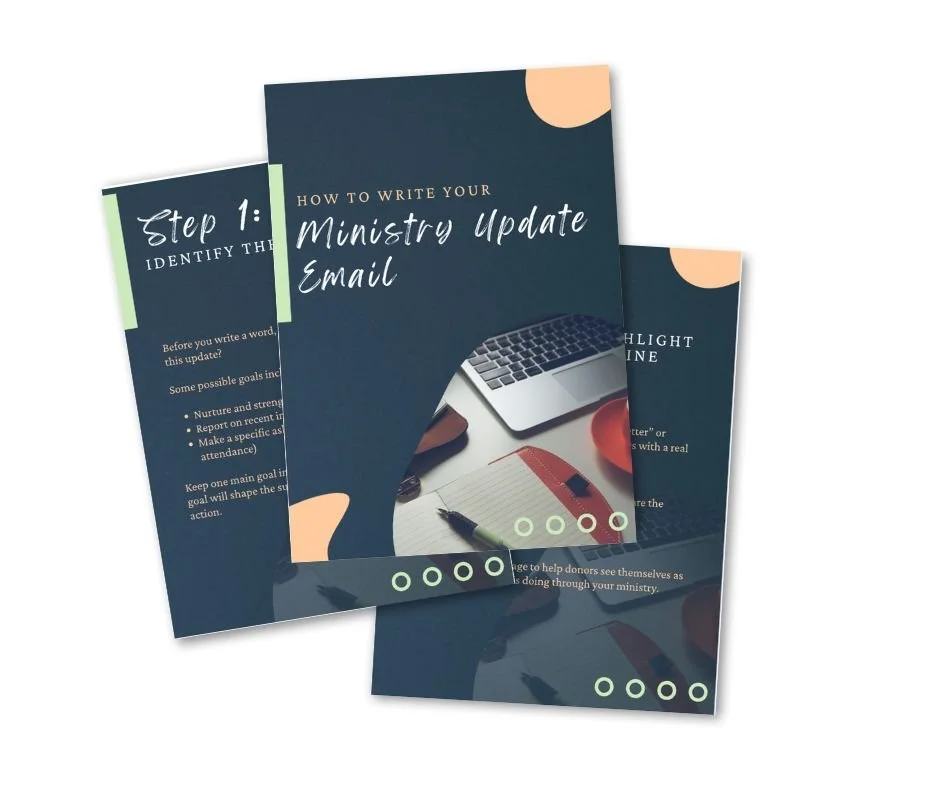
Struggling to Write Your Newsletters so Supporters Engage?
You’ve seen God do amazing things- but if your emails are vague or unclear, your supporters won’t feel connected.
This free guide will show you how to:
Write subject lines that get your emails opened
Follow a simple story-driven format for every update
Engage donors with clear, Christ-centered storytelling
Have you ever looked at something you wrote—an email, a newsletter, a social post—and wondered, “Why isn’t this connecting? Why does it feel like no one is getting it?”
Low social media engagement…
Barely-there replies to fundraising emails…
Donors skimming your updates instead of leaning in…
If you’ve been feeling frustrated, confused, or stuck with your fundraising messaging, you are not alone. Many ministry leaders feel like they’re working so hard to communicate well, but nothing seems to land.
And most of the time, the problem isn’t your passion or your mission.
The problem is how the brain processes information—and what you’re unknowingly competing with every time you communicate.
Let’s talk about why this happens… and the powerful tool God has already given you to fix it.
Information Overload Is Silencing Your Messaging
Your donors—like you—are overwhelmed. Their minds are overloaded with:
nonstop notifications
endless content
crowded inboxes
constant noise
emotional burnout
So when your messaging is packed with information and explanations and updates, even if it’s good, important information… their brain simply can’t absorb it.
Information rarely sticks.
Information rarely moves someone.
Information rarely inspires engagement.
But there is something that does.
The Power of Story: God-Wired, Brain-Activated, Attention-Grabbing
Storytelling isn’t just creative—it’s neurological. God designed the human brain to light up when it hears a story.
Stories:
engage multiple parts of the brain
create emotional connection
bypass resistance
cut through noise
increase focus and curiosity
When someone hears a story, they lean in instead of tuning out. Their heart opens instead of bracing. Their mind stays engaged instead of skimming.
This is why ministries who use story-driven communication see:
higher donor engagement
more meaningful conversations
stronger long-term donor relationships
better email and social media response
deeper trust
And there are three huge reasons stories make your messaging more effective.
1. Storytelling Helps You Engage Donors Quickly
You have seconds—literally seconds—to catch someone’s attention.
A donor reads the first line of your email…
decides whether to ignore your post…
or glances at your newsletter while waiting in line…
And the truth is: most ministry communication blends right into the noise.
But storytelling changes that instantly.
A story opens with a moment. A tension. A real scenario.
The brain pauses.
The heart leans forward.
The donor thinks, “Wait… what happened next?”
That moment alone is enough to stop the scroll.
If your messaging begins with story instead of explanation, you immediately increase the chance that:
your donor will pay attention
your message will be heard
your impact will be understood
Engagement begins at the first sentence—and stories make that first sentence powerful.
2. Storytelling Builds Trust With Your Donors
Trust is the foundation of donor relationships. Without trust, donors hesitate, second-guess, or disengage.
Stories build trust naturally because they show:
your integrity
your consistency
your compassion
your impact
your faithfulness to the mission
When a donor hears a real story of someone whose life was changed through your ministry, it’s no longer abstract.
It’s human.
It’s personal.
It’s proof.
Your donor thinks:
“This ministry is doing real work.”
“My giving actually matters.”
“These are real people being impacted.”
Trust grows.
Commitment grows.
Long-term partnership grows.
3. Storytelling Makes Your Ministry Memorable
Facts are forgettable. Even important ones.
But stories stay.
People remember:
the little girl who found safety
the teen who met Jesus
the missionary who prayed with a grieving family
Why?
Because stories embed themselves emotionally and visually in the mind.
And here’s the beautiful part:
When people remember your stories,
they remember your ministry.
And when they remember your ministry,
they remember how they feel about it—
trust, connection, purpose.
Storytelling makes you memorable in a way that no amount of information ever could.
How to Start Using Storytelling in Your Messaging Today
You don’t need a big content plan to begin. Start simply:
Look for transformation stories.
Share one person’s journey, not a list of facts.
Start with a moment of tension.
Highlight the “before” and “after.”
Make the person—not the ministry—the center of the story.
Then watch how donor engagement changes.
Because it will change.
Story bypasses noise.
Story builds trust.
Story sticks.
Storytelling is one of the most powerful tools you can use to clarify your message, increase donor engagement, and strengthen your fundraising communication.
You Have a Story Opportunity
If your messaging feels flat, confusing, or ineffective, storytelling is the bridge between frustration and clarity.
It helps your donors:
understand you
trust you
remember you
and engage with you
Your ministry deserves messaging that reflects the impact God is making through your work.
And your donors deserve communication that brings them into the story—not drowns them in information.
Want Support From Other Women Fundraising for Their Ministries?
If you want encouragement, clarity, and a place to grow in your fundraising and communication, join us inside the free community:
👉 Ministry Fundraising for Women Leaders
irisstorytelling.com/community
You don’t have to navigate messaging alone. Come be surrounded by women who understand the calling, the pressure, and the mission.
More Episodes