Ep. 47 | Fundraising Messaging Not Working? Start With Step #1
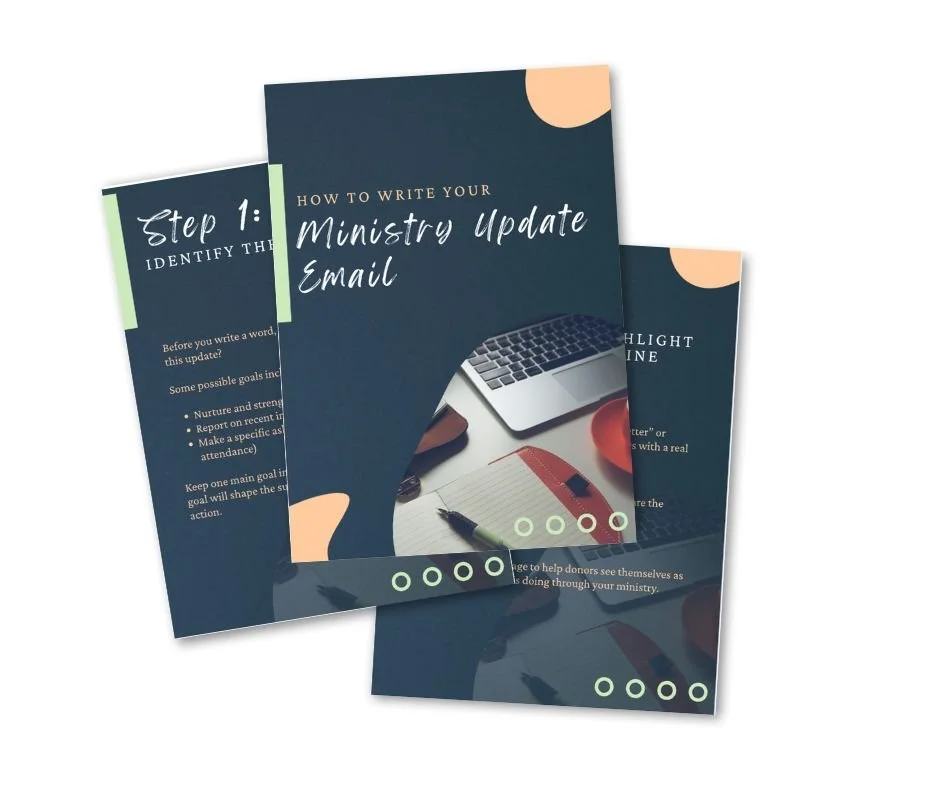
Struggling to Write Your Newsletters so Supporters Engage?
You’ve seen God do amazing things- but if your emails are vague or unclear, your supporters won’t feel connected.
This free guide will show you how to:
Write subject lines that get your emails opened
Follow a simple story-driven format for every update
Engage donors with clear, Christ-centered storytelling
You already know it.
Your fundraising messaging isn’t working.
It feels inconsistent. Scattered. Different words on different platforms. One message on your website, another in your newsletters, another on social media—and none of it seems to connect. Donors aren’t responding the way you hoped, and fundraising feels harder than it should.
What makes it even more frustrating is this: you care deeply about your ministry. You believe in the work. You know the need is real. But when it comes time to communicate that need clearly and confidently, everything feels muddy.
And the question that keeps coming up is simple—but paralyzing:
Where do I even start?
Why Most Messaging Feels So Hard
When ministry messaging stops working, the instinct is often to tweak tactics:
Rewrite the website
Try new social media posts
Change email subject lines
Launch a new campaign
But the problem usually isn’t tactics.
The problem is that the core of the message isn’t clear.
And when the core isn’t clear, everything built on top of it feels confusing—to you and to your donors.
Step 1: Go Back to the “Why”
The first step to fixing your fundraising message is not learning a new formula or finding better words.
It’s going back to the very beginning.
You need to clearly answer one foundational question:
Why does this ministry exist?
Not the surface-level answer.
Not the program list.
Not the mission statement you’ve memorized.
The real why.
Ask yourself:
Why was this ministry started?
What would happen if it had to close tomorrow?
Who would be affected—and how?
What is truly at stake for the people you serve?
Asking “why” repeatedly helps peel back layers until you reach the core need your ministry exists to meet.
This is where powerful fundraising messaging always begins.
The Main Need Is the Core of Your Message
Most ministries serve multiple needs through multiple programs. That’s normal.
But your messaging can’t communicate everything at once.
Effective fundraising messaging requires clarity around one main need—the central conflict your ministry is responding to.
When donors visit your website, read your emails, or hear you speak, they should immediately understand:
What problem exists
Why it matters
Why it shouldn’t stay this way
That one main need becomes the foundation for all your communication—your website, newsletters, social posts, appeals, and presentations.
Connecting the Need to Your Donor
Once the main need is clear, the next step is learning how to connect it to your donor.
Donors don’t give because of information alone.
They give because they agree with the problem.
When the need is framed clearly—often as a philosophical or moral problem—your donor can say:
“Yes. That’s not how things should be.”
“Yes. That matters.”
“Yes. I want to be part of the solution.”
That emotional agreement is what transforms passive supporters into engaged, committed donors.
Start Small—and Start Today
Clarifying your fundraising messaging takes time. It’s not something you have to fix in one sitting.
Start with step one:
Write down your answers.
Sit with them.
Look for patterns.
Let clarity emerge slowly.
Small steps done well lead to big breakthroughs.
And if you know you want help walking through this process—step by step, with guidance and clarity—I’d be honored to help you.
You don’t have to do this alone.
More Episodes