Ep. 39 | How Imposter Syndrome Is Sabotaging Your Fundraising Messaging
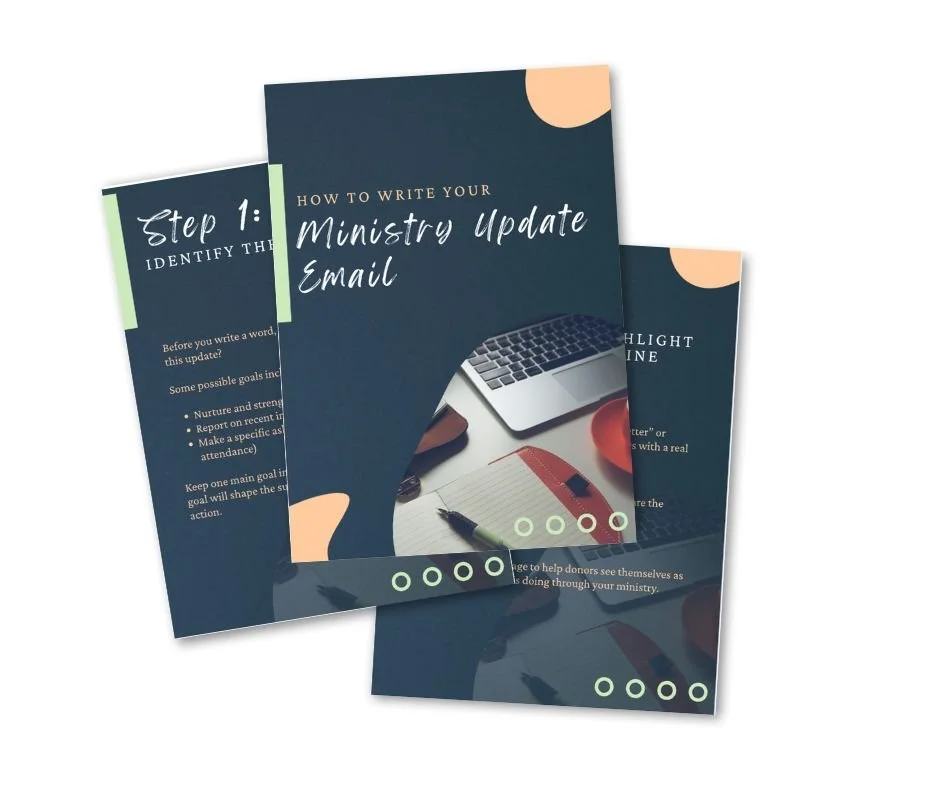
Struggling to Write Your Newsletters so Supporters Engage?
You’ve seen God do amazing things- but if your emails are vague or unclear, your supporters won’t feel connected.
This free guide will show you how to:
Write subject lines that get your emails opened
Follow a simple story-driven format for every update
Engage donors with clear, Christ-centered storytelling
If you’ve ever stepped into your fundraising role and suddenly felt unsure, unqualified, or like you’re “faking it,” you’re not alone. Imposter syndrome hits ministry leaders hard—and it quietly slips into your messaging in ways that can confuse donors, weaken your communication, and make fundraising feel even heavier than it already does.
When Imposter Syndrome Shows Up in Your Messaging
Imposter syndrome doesn’t stay inside your head.
It comes out in the way you communicate—hesitant language, overly soft asks, apologizing, overexplaining, or keeping things vague because you don’t feel confident.
And here’s the thing:
Donors mirror your confidence.
If you sound unsure, they start feeling unsure too.
It’s not because you don’t love your ministry or don’t believe in the work. It’s because imposter syndrome pushes you into a mindset where everything feels like it rests on you—your abilities, your experience, your qualifications.
And that is a heavy place to live.
It’s Not About You—And That’s the Freedom You Need
The turning point comes when you remember something foundational:
This ministry is God’s.
He is the one working through you.
And He equips the people He calls.
When the focus shifts from “I have to be enough” to
“God equips me for what He’s doing,”
that pressure begins to break off.
This mindset shift doesn’t just help you feel better internally—it radically changes the way you show up in your communication. Suddenly the message is no longer about your qualifications. It’s about God’s power at work through your ministry.
And that changes everything.
Why Your Messaging Needs to Reflect This Shift
A lot of ministries unintentionally make themselves the center of the story:
We do this.
Our ministry has done this.
Let us tell you what we’ve accomplished.
There’s nothing wrong with sharing impact, but when the story is always about your ministry, you carry the weight of it—and imposter syndrome grows.
It also keeps donors on the outside, watching from a distance.
But donors don’t want to watch.
They want to participate.
They want to play a meaningful role in what God is doing.
That means your messaging needs a shift too.
Shift the Story: God Is Working, and the Donor Has a Role
Instead of centering the message around your ministry, reposition it:
Look what God is doing — and here’s how you can be a part of it.
This simple shift:
gives God the glory,
invites donors into a meaningful role,
and frees you from feeling like everything depends on you.
Now you’re not the hero.
The donor is the one stepping into impact.
And you’re simply the guide—the one helping them understand the need and showing them how they can partner with what God is already doing.
When you communicate from this place, imposter syndrome loses its grip because you’re no longer trying to prove yourself. You’re just pointing people back to God’s work.
A Simple Step You Can Take Today
If imposter syndrome has been weighing you down, take a few minutes to review one piece of your messaging—your website homepage, a recent email, a newsletter line.
Ask yourself:
Am I talking about what we do,
or what God is doing?
Am I talking about our impact,
or the donor’s role in meeting a real need?
Rewrite one paragraph with this lens:
God is moving. The donor is invited. I’m the guide.
You’ll be amazed at how different your communication feels—and how much lighter you feel, too.
More Episodes