Ep. 63 | Missionary Basics: 5 Steps to Share Your Story Clearly—Even If Fundraising Feels Awkward
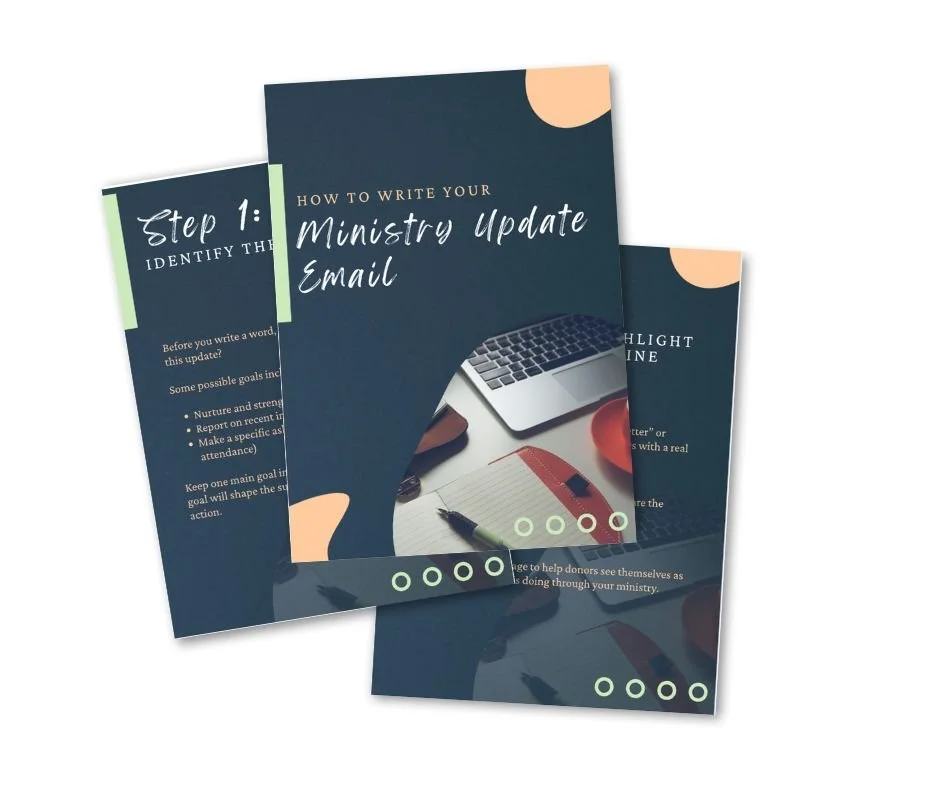
Struggling to Write Your Newsletters so Supporters Engage?
You’ve seen God do amazing things- but if your emails are vague or unclear, your supporters won’t feel connected.
This free guide will show you how to:
Write subject lines that get your emails opened
Follow a simple story-driven format for every update
Engage donors with clear, Christ-centered storytelling
Have you ever been asked what your ministry does and immediately felt yourself start spiraling?
You start listing programs.
You mention a few initiatives.
You try to explain the heart behind it.
Then suddenly you can feel that you’re rambling.
You’re talking, but it doesn’t feel clear.
And usually you can tell.
The other person is being polite. They’re nodding. But they’re not really tracking with you.
That’s frustrating, especially when you know God really did call you here.
You care deeply.
You know this work matters.
You just don’t know how to explain it simply.
That’s what this post is about.
Because clear messaging is not about sounding polished or clever. It’s about helping donors understand what you do fast enough that they can actually connect with it.
1. Identify the main need you actually meet
This is where a lot of ministry leaders get stuck.
Because your ministry probably does meet a lot of needs.
You might serve families.
Run Bible studies.
Provide food.
Offer discipleship.
Support kids.
Equip leaders.
All of that may be true.
But if you want your message to be clear, you need to identify the one main core need your ministry is centered around.
Not a giant list.
Not a vague mission statement.
Not a broad Christian platitude.
Just one main need.
If you say something like, “We help people know Jesus,” that may be true, but it’s too broad to hold onto.
Your donor needs something more concrete.
What specific people group are you serving?
What is at stake for them?
What urgent need are you helping meet?
That is where your message starts getting clear.
2. Connect that need to real people
In ministry, you’re always communicating to two groups.
The people you serve.
And the donors who make that ministry possible.
You need to connect the need to both.
Let’s say your ministry supports foster families.
The people you serve are foster parents who need practical support so they can say yes to welcoming children into their homes.
But your donors also have a connection point.
Maybe they care deeply about foster care, but they are not in a position to foster children themselves.
They still want to help.
They still want to be part of the solution.
That means your message has to show how the ministry connects those two groups.
The need is real.
The people are real.
And the donor’s role is real too.
That’s where things begin to click.
3. Tie it clearly to partnership
A lot of ministries assume people will connect the dots on their own.
They won’t.
You have to make the connection obvious.
If a donor gives, what exactly happens?
How does their partnership help meet this need?
Use your words to make that plain.
If your donor gives, foster families get beds, clothes, support, and practical resources that make it easier for them to welcome children into safe homes.
That’s not manipulative.
That’s clarity.
You’re simply showing them where their role fits.
People respond much faster when they can see exactly how their giving matters.
4. Paint the vision of success
Don’t stop at the need.
You also need to show what happens when someone says yes.
What does success look like for the people you serve?
What does success look like for the donor who partners with you?
This is where your message becomes compelling.
You paint the picture.
Families are equipped.
Kids are welcomed into nurturing homes.
Foster parents are supported instead of overwhelmed.
Donors get to be part of something deeply meaningful and life-changing.
That picture matters.
Because donors are not just responding to a problem. They are responding to a vision of what can happen when they step in.
Help them see it.
5. Make sure a fifth grader could understand it
This one is simple, but it will expose a lot.
If a fifth grader could not repeat back what you said, it is not clear yet.
That does not mean your ministry is small or shallow.
It means your message still needs refining.
This work is harder than it sounds because you’re taking a lot of vision, nuance, and moving parts and turning them into a few simple sentences.
That takes intentionality.
So if it feels messy at first, that’s normal.
Keep refining.
Keep simplifying.
Keep trimming away anything that sounds impressive but doesn’t actually make things clearer.
It does not need to be clever.
It needs to be clear.
Quick recap
Here are the five steps again:
Identify the one main need your ministry meets
Connect that need to real people
Tie it clearly to partnership
Paint the vision of success
Make sure a fifth grader could understand it
That’s how you make your message easier for donors to understand.
And when donors understand faster, they connect faster.
Want help with this?
If fundraising has been feeling awkward, heavy, or unclear, I’d love for you to join my free live workshop, Fundraise with Confidence.
Inside, I’ll walk you through why fundraising feels so uncomfortable, how to reframe asking for support so it feels honest and aligned, and how to start the conversation clearly.
You’ll walk away lighter, clearer, and more confident about inviting people to partner with your ministry.
Grab your seat here:
More Episodes